

How to Check Your Child for Head Lice at Home
A school notice, an itchy scalp or one suspicious speck can send any parent into panic mode. Comb & Calm was built to make checking your child for head lice more guided, private and simple.
It usually starts with one of three things. A school email. An itchy scalp. Or a parent saying, “Wait… what is that in your hair?”
And suddenly you’re standing under the brightest light in the house, pulling apart tiny sections of hair and trying to decide whether you’re looking at dandruff, lint, a nit or something else entirely. Checking a child for head lice has traditionally been very manual. That’s exactly why we built Comb & Calm.
A guided way to check
Comb & Calm turns your phone into part of the checking process. Instead of guessing where to look or trying to photograph random areas of the scalp, the app guides you through six specific images around your child’s head. The goal is consistency. You’re not left wondering whether you checked the right places or whether you missed an important area. Comb & Calm walks you through the process step by step.
What happens after you take the images?
Once the guided images are captured, Comb & Calm uses AI-assisted visual analysis to review them for visual characteristics consistent with head lice. This is the part that can be especially helpful for parents. Because the difficult question often isn’t: “Should I check?” It’s: “What am I actually seeing?”
Why traditional checking can be difficult
Head lice are small. Nits are even smaller. Hair texture, lighting, movement and ordinary debris can all make a visual check confusing. And children are not always particularly interested in sitting still while you inspect every section of their scalp. Comb & Calm was designed to make that process more structured.
What should you still look for?
When checking your child, pay attention to areas close to the scalp, particularly around the ears and the nape of the neck. You may be looking for live lice or small objects attached to individual strands of hair that could warrant a closer look. But you don’t have to rely on one quick glance. The app guides you through a complete set of images so the check is more systematic.
What kind of result will you receive?
After the images are analyzed, Comb & Calm provides a result based on what is visible in the submitted images. You may receive:
Clear — no visual characteristics consistent with head lice were identified in the images.
Requires Review — something in the images warrants a closer look.
The goal is not to create more panic. It’s to help give parents a clearer next step.
Check before you spiral
When lice is a possibility, it’s easy to jump straight from uncertainty to panic. Comb & Calm was created for the space in between.
A guided, intelligent way to check before deciding what to do next.
Because sometimes peace of mind starts with simply knowing where to look.

First Signs of Head Lice: What to Look For
Head lice aren't always obvious at first. These are some of the signs that may prompt a closer check.
Head lice don't always announce themselves. There may be no dramatic moment when you suddenly realize they're there. Often, something simply makes you wonder.
Itching
An itchy scalp is one of the best-known signs associated with head lice. But itching isn't proof of lice, and its absence doesn't necessarily rule them out.
A crawling or tickling sensation
Some people describe feeling movement in their hair or on their scalp. Again, this isn't enough by itself to determine that lice are present.
Irritation from scratching
Repeated scratching may leave areas of the scalp irritated.
Finding something in the hair
Sometimes the first clue is visual, a tiny insect or a small object attached to a strand of hair. That's when a careful check becomes particularly important.
Exposure
If someone you've had close hair-to-hair contact with has head lice, performing a careful check is sensible even if you aren't experiencing obvious symptoms.
Check instead of guessing
Symptoms can tell you when to look more closely. They cannot replace actually checking the hair.
Comb & Calm was built around that distinction: don't guess from symptoms alone. Look.
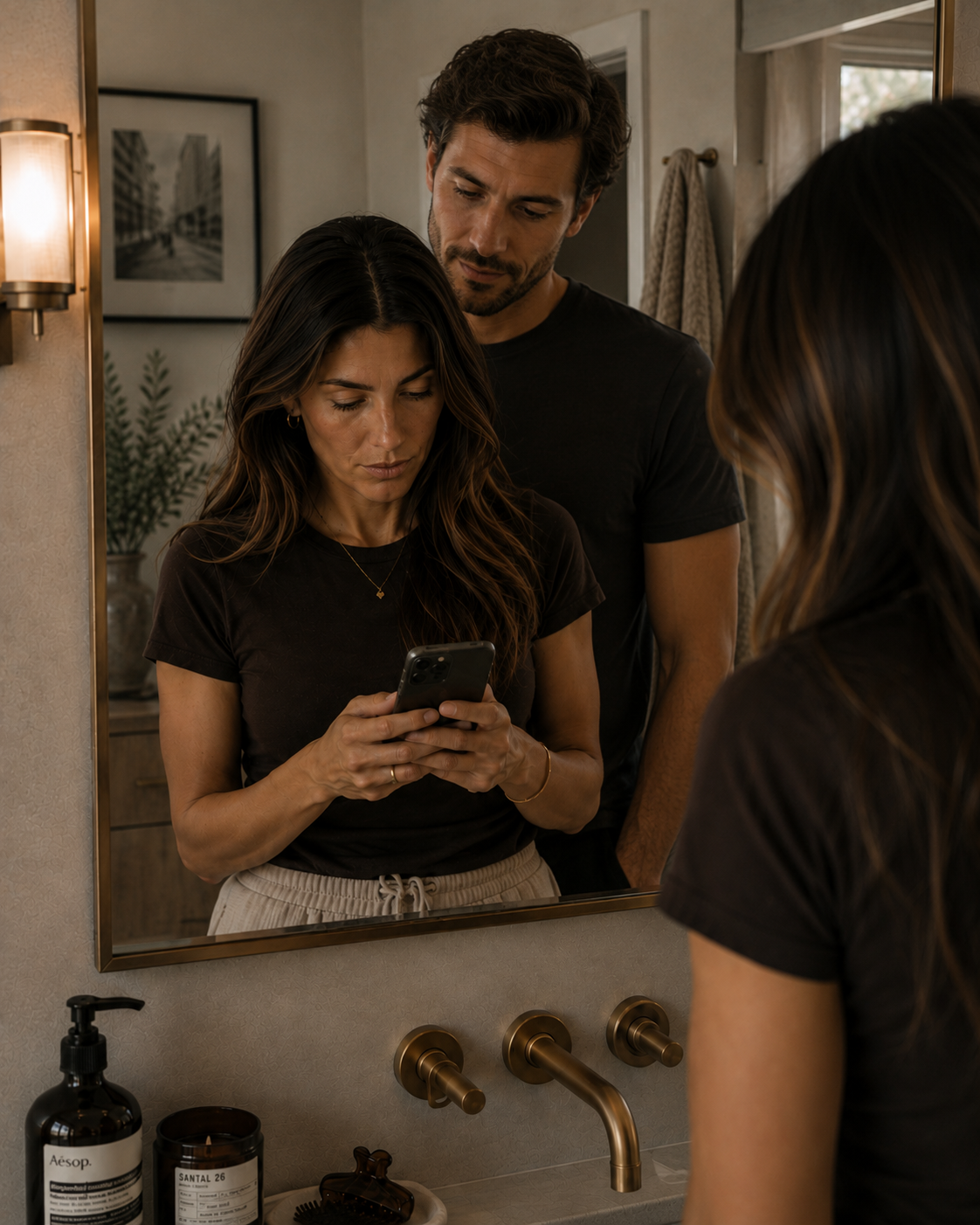
How to Check Yourself for Head Lice
Checking someone else's head is difficult enough. Checking your own can be even harder. Here's a more systematic way to do it.
Checking someone else’s head for lice is one thing. Checking your own head is another.
You can’t easily see behind your ears. You can’t properly inspect the back of your neck. And trying to hold two mirrors while separating your hair and deciding whether a tiny speck is something worth paying attention to isn't exactly simple. It’s one of those everyday problems that made us ask: Why are we still doing this entirely by eye?
Your phone can help you check
Comb & Calm was created to make checking for head lice more accessible from home. Instead of trying to inspect every part of your own scalp in a mirror, the app guides you through taking six specific images around the head. You don't have to decide where to photograph. Comb & Calm guides you through the process. Once your images are captured, our AI-assisted technology analyzes them for visual characteristics consistent with head lice.
Why checking yourself can be so difficult
Head lice are small. Nits are even smaller. Add hair, shadows, movement and areas of your own head that are difficult to see, and a traditional self-check becomes challenging very quickly. Even when you find something, another problem begins: What am I actually looking at?
Dandruff, lint, hair products and other debris can sometimes create uncertainty during a visual check. Comb & Calm was designed for that moment.
A different way to check for head lice
For decades, checking for lice has largely meant having someone manually search through the hair. Your smartphone gives us another tool.
Comb & Calm combines guided image capture with AI-assisted visual analysis to provide another way to check, privately, from home, using the phone already in your hand. No balancing mirrors. No trying to see the back of your own head. No wondering whether you photographed the right place. The app guides you through it.
What happens after your images are reviewed?
Comb & Calm analyzes the submitted images and provides a result based on what is visible in them. If no visual characteristics consistent with head lice are identified, you'll receive a Clear result. If something in the images warrants a closer look, you'll receive Requires Review, along with guidance on what to do next. The goal is simple: Help you know when to look closer.

What Do Lice Eggs Look Like in Hair?
Lice eggs are tiny and surprisingly easy to confuse with other things in the hair. Here's what to look for.
One of the most confusing parts of checking for head lice isn't finding an insect. It's finding a tiny speck attached to a strand of hair and wondering:
Is that a lice egg? Lice eggs are commonly called nits. They are very small and are attached to individual hair shafts.
What color are lice eggs?
Their appearance can vary. Depending on their developmental stage and other factors, they may appear whitish, yellowish, tan or brown. Because they're so small, lighting can also dramatically change what you think you're seeing.
Where should you look?
Lice lay their eggs on hair shafts, often close to the scalp. When checking, use good lighting and work through small sections of hair rather than looking only at the surface. Pay particular attention behind the ears and around the nape of the neck.
Lice eggs or dandruff?
This is where many people become confused. Dandruff tends to sit loosely on the scalp or hair and may move relatively easily. Nits are attached to the hair shaft and generally don't simply brush away. But there are plenty of other things such as: product buildup, lint, dried skin and debris, that can complicate a visual check.
When you can't tell
If you've ever stared at one tiny spot in someone's hair for several minutes and still weren't sure, you're not alone.
It's exactly the kind of uncertainty Comb & Calm was designed to address. See something you're unsure about? Check with Comb & Calm.

How Do You Know If You Have Lice?
An itchy scalp isn't the only sign of head lice. Here’s what to look for and how to perform a more careful check.
Maybe your scalp started itching. Maybe there was a lice notice from school. Or maybe someone in your household found something suspicious in their hair.
Now you're wondering: How do I know if I actually have lice? The most useful way to answer that question is to check the hair and scalp carefully.
Look for live lice
Live head lice are small, six-legged insects that tend to remain close to the scalp. Because they're small and can move quickly, finding one isn't always easy.
Use bright lighting (but be careful, lice run from light), separate the hair into small sections and inspect close to the scalp.
Look for nits
Nits are lice eggs attached to individual strands of hair. They can sometimes be mistaken for dandruff, lint or hair-product residue. Unlike loose debris, however, nits are attached more firmly to the hair shaft.
Pay attention to itching, but don't rely on it
Scalp itching is commonly associated with head lice, but itching alone cannot tell you whether lice are present. Some people may not immediately experience itching, particularly with a first infestation.
Check the right six areas
Pay particular attention to:
Behind both ears
The nape of the neck
The crown and scalp
Hair close to the scalp
A systematic check is much more useful than quickly looking through the surface of the hair.
When you're still unsure
The frustrating reality is that many things in hair can resemble lice or nits.
Comb & Calm uses guided image capture and AI-assisted visual analysis to help review images for visual characteristics consistent with head lice. Wondering what you're seeing? Begin a screening with Comb & Calm.

What Do Lice Look Like? A Guide to What You’re Seeing
Not sure what you’re seeing in the hair? Here’s what head lice and nits can look like, where they’re commonly found, and what to look for when checking.
You’re looking through the hair and suddenly see something. It’s tiny. Maybe brown. Maybe white. Maybe it moved, or maybe you’re not even sure.
The first question is usually the simplest one: What do lice actually look like?
Head lice are small insects that live close to the scalp and feed on human blood. Adult lice are roughly the size of a sesame seed, while younger lice can be considerably smaller. Their color can vary, which is one reason identifying them isn’t always as straightforward as people expect. Depending on their stage of development, lighting and surroundings, lice may appear tan, grayish or brown.
What do lice look like in hair?
Live lice have six legs and an elongated body. Because they move quickly through hair and tend to stay close to the scalp, they can be difficult to spot. That means simply looking at the top of the hair may not tell you very much. Instead, divide the hair into small sections and look closely near the scalp, particularly around the ears and the nape of the neck.
What about lice eggs?
Lice eggs, commonly called nits, look very different from adult lice. They are extremely small and are attached to individual hair shafts. They may appear whitish, yellowish, tan or brown. One useful distinction is that debris such as dandruff can often be moved or brushed away relatively easily. Nits are attached more firmly to the hair shaft.
Why identifying lice can be confusing
Hair products, dandruff, lint, scabs and other debris can all look suspicious when you're actively searching for lice. And when something is only a millimeter or two across, identifying it by eye isn't always easy. That's why the goal of a careful lice check isn't to panic at the first white speck you see. It's to look systematically and gather better information.
Not sure what you're seeing?
Comb & Calm was created to bring another layer of technology to the checking process. Using guided images and AI-assisted visual analysis, Comb & Calm reviews images for visual characteristics consistent with head lice. Because sometimes the hardest part isn't knowing that you should check. It's knowing what you're looking at. Not sure what you're seeing? Begin a Comb & Calm screening.

Can Men Get Head Lice?
Can men get head lice? Yes. While beard infestations are rare, they are possible in certain situations. Learn what every family should know after head lice enter the home.
When head lice enter a household, it's natural to focus on the children. But many families wonder whether adults can get head lice too. The answer is yes!
Anyone with hair can get head lice through close head-to-head contact. While children are more commonly affected because of their daily interactions at school and activities, men are not immune.
One question that comes up from time to time is whether head lice can live in a beard. The answer is rarely, but it is possible.
Head lice are adapted to live in the hair on the scalp. However, they can occasionally be found in a beard, particularly if a man has little or no hair on his head, or if the beard directly connects to the hair on the scalp, allowing lice to move between the two. Fortunately, this is uncommon.
Although children are often the first to bring head lice home from school, they don't always stay there. Close contact between family members can allow lice to spread to adults, which is why checking everyone who has had direct head-to-head contact is an important part of managing an infestation. A quick family check can help identify concerns early and reduce the chance of continued spread within the household.
If someone in your household has head lice, it's a good idea for anyone who has had close head-to-head contact to perform a careful scalp check. Understanding how lice spread, and where they prefer to live can help families respond with confidence instead of unnecessary worry.

The Truth About How Head Lice Spread
Lice don't jump or fly. Learn the facts about how head lice really spread in schools and why understanding transmission can help parents respond with confidence.
Receiving a lice notification from school can feel overwhelming. One of the first questions many parents ask is: How did this happen?
The good news is that many of the things people believe about how lice spread simply aren't true.
Head Lice Don't Jump
Unlike fleas, head lice cannot jump from one person to another. They don't have the legs needed to leap between heads.
Head Lice Don't Fly
Head lice also don't have wings. They cannot fly through the air or move across a classroom.
So How Do They Spread?
Head lice spread primarily through direct head-to-head contact. That's why they're most commonly seen among school-aged children, where kids naturally play, learn, and spend time close together.
Common situations include:
Playing with friends
Reading side by side
Group activities
Sleepovers
Sports and dance
Family hugs
A lice notification from school doesn't necessarily mean your child has lice. It simply means there has been an exposure within the school community. The best next step is to perform a careful scalp check and continue monitoring over the following days. Knowledge is one of the best tools parents have. Understanding how lice actually spread can help replace panic with confidence.

Lice or Dandruff? How to Tell the Difference
Wondering if it's dandruff or head lice? Learn how to tell the difference, why itching is an allergic reaction that not everyone experiences, and what to look for before considering treatment.
It almost always starts the same way. You notice your child scratching their head. Maybe you part their hair and see tiny white flakes. Suddenly you're wondering:
Is it dandruff? Or could it be head lice?
For many parents, the two can look surprisingly similar at first glance. Understanding the differences can help you decide what to do next, and avoid unnecessary stress or treatment. Both dandruff and head lice can cause an itchy scalp. Both can leave small white particles in the hair. Both often send parents searching online for answers. The difference is that they have very different causes and require very different next steps.
What Dandruff Usually Looks Like
Dandruff appears as loose white or yellowish flakes that come from the scalp. These flakes are dry and can usually be brushed or shaken away easily. They may appear throughout the hair and are often accompanied by dry skin or mild scalp irritation.
What Lice Eggs (Nits) Usually Look Like
Lice eggs, commonly called nits, are much smaller than many parents expect. Rather than sitting loosely on the hair, they are attached firmly to individual hair shafts with a glue-like substance. Unlike dandruff, they do not brush away easily. Because they can be very small and difficult to distinguish from other debris, identifying them isn't always straightforward.
Itching Isn't Always the First Sign
Many parents assume that if a child has lice, they'll immediately start scratching. In reality, that's not always the case. The itching associated with head lice is an allergic reaction to the saliva the lice secrete when they feed. Like any allergy, not everyone reacts. Some people experience little or no itching, especially during the early stages of an infestation. Because of this, the absence of itching does not necessarily mean lice are not present. Likewise, an itchy scalp can have many other causes, including dandruff, dry skin, eczema, or irritation from hair products.
If you're unsure what you're seeing, or if symptoms continue despite treatment for dandruff, it may be helpful to have the scalp evaluated by a qualified healthcare professional or experienced lice specialist. The goal isn't simply to find lice. It's to make informed decisions based on what is actually present.

Before You Treat, Know.
Learn how AI lice detection is helping parents check for head lice using guided smartphone images before deciding on treatment.
Why confidence, not panic, is the most important first step.
It usually starts with a message. "There has been a case of head lice reported in your child's class." Within minutes, your mind begins racing. You search online, compare blurry photos of nits and dandruff, and wonder if every itch means something more. For something so common, head lice have a remarkable way of creating uncertainty.
The hardest part isn't treating lice. It's knowing if they're actually there.
For generations, parents have relied on bright bathroom lights, fine-tooth combs, internet searches, and a lot of guessing. The truth is, checking for lice isn't always straightforward. Hair thickness, lighting, movement, product buildup, dandruff, and even dry skin can make a simple scalp check feel overwhelming. It's easy to second-guess what you're seeing, especially when you're trying to inspect your own child's hair.
That uncertainty often leads families to do one of two things: Treat when they don't need to. Or wait because they aren't sure. Neither feels good.
Technology has changed almost everything.
We can identify a plant from a single photo. Translate languages instantly. Unlock our homes with our phones. Yet when it comes to checking for head lice, many families are still relying on guesswork. We believed there had to be a better first step.
Comb & Calm combines guided smartphone photography with artificial intelligence to help families examine the scalp in a structured, consistent way. Instead of wondering where to look, the app walks you through six guided scalp images, helping capture the areas where a careful visual check matters most. Artificial intelligence then reviews those images for visible characteristics that may be consistent with head lice, giving families additional information before deciding what to do next.
According to the Comb & Calm FAQ, head lice cannot jump or fly, they spread primarily through direct head-to-head contact. That is why outbreaks are most common among young children who spend time playing, learning, and interacting closely together. Understanding how lice actually spread helps families respond with facts instead of fear.
Replacing panic with confidence
Head lice are incredibly common. They are not a reflection of cleanliness. They are not a reflection of parenting. They're simply something millions of families encounter every year. At Comb & Calm, we believe the experience shouldn't begin with anxiety. It should begin with clarity. Our mission has never been to replace professional care. It's to give parents a smarter, calmer, and more informed first step. Because when you know more, you worry less. And every parent deserves that.